


A tropical twist on Kaeng Sapparot — the one step that changes everything
I don't think there's a cuisine in the world that transports me the way Thai food does.
Not just to a mood or a vibe, but to an actual place — the smell of lemongrass in hot oil and I'm back in Thailand instantly. 🇹🇭
I can feel the sun, hear the water, picture those long, narrow long-tail boats cutting through the canals, wind in my face, everything moving and alive.
Thailand has that effect on you. It gets under your skin in the best possible way. 🌊🌊🇹🇭
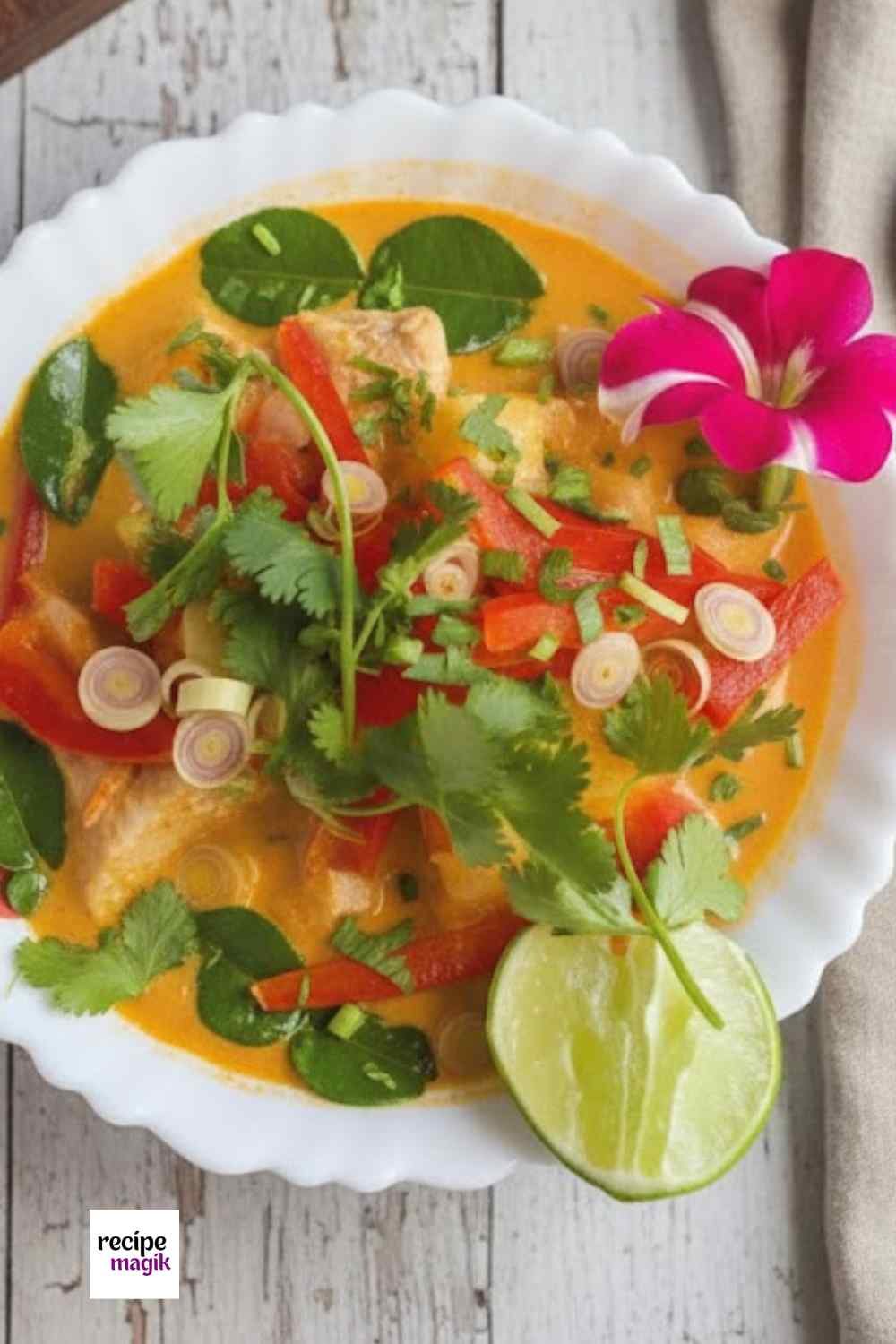
And at the end of those long, beautiful, exhausting days of exploring — after the temples and the markets and the boat rides and the walking — what I always came back to was something so simple it almost felt too humble to be that good.
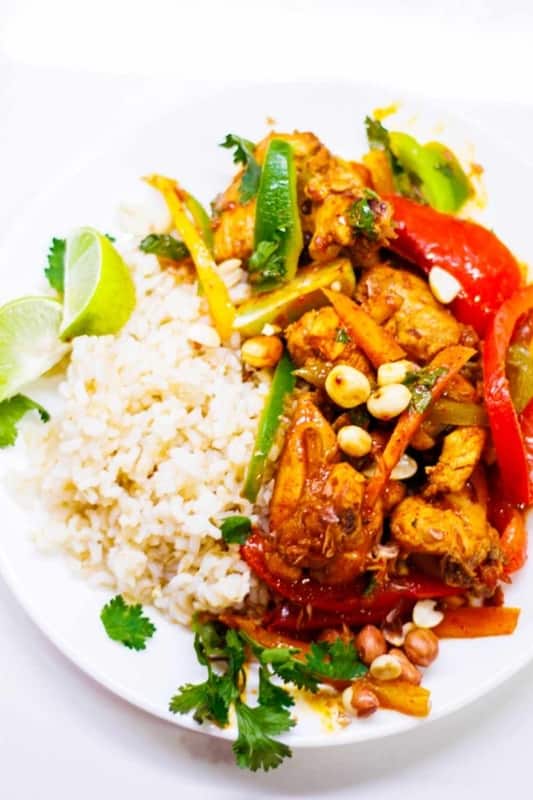
A bowl of Thai red curry over jasmine rice. Creamy, aromatic, a little spicy, deeply comforting.
That combination of tropical flavors and warming spices just does something. It's wholesome in the truest sense of the word.🌴🌀
I've been chasing that feeling ever since.
This recipe is my latest iteration of that chase. I already love a classic Thai red curry chicken, but this time I wanted to lean into the tropical notes even harder — so I started playing around with pineapple 🍍🍍🍍
Now, I know what you're thinking: Kaeng Sapparot (Thai Pineapple Curry) is a real, traditional dish, and yes, it absolutely is.
But my version takes one extra step that changes the dish entirely — I caramelize the pineapple first, with honey and a touch of cinnamon, before it ever sees the curry.
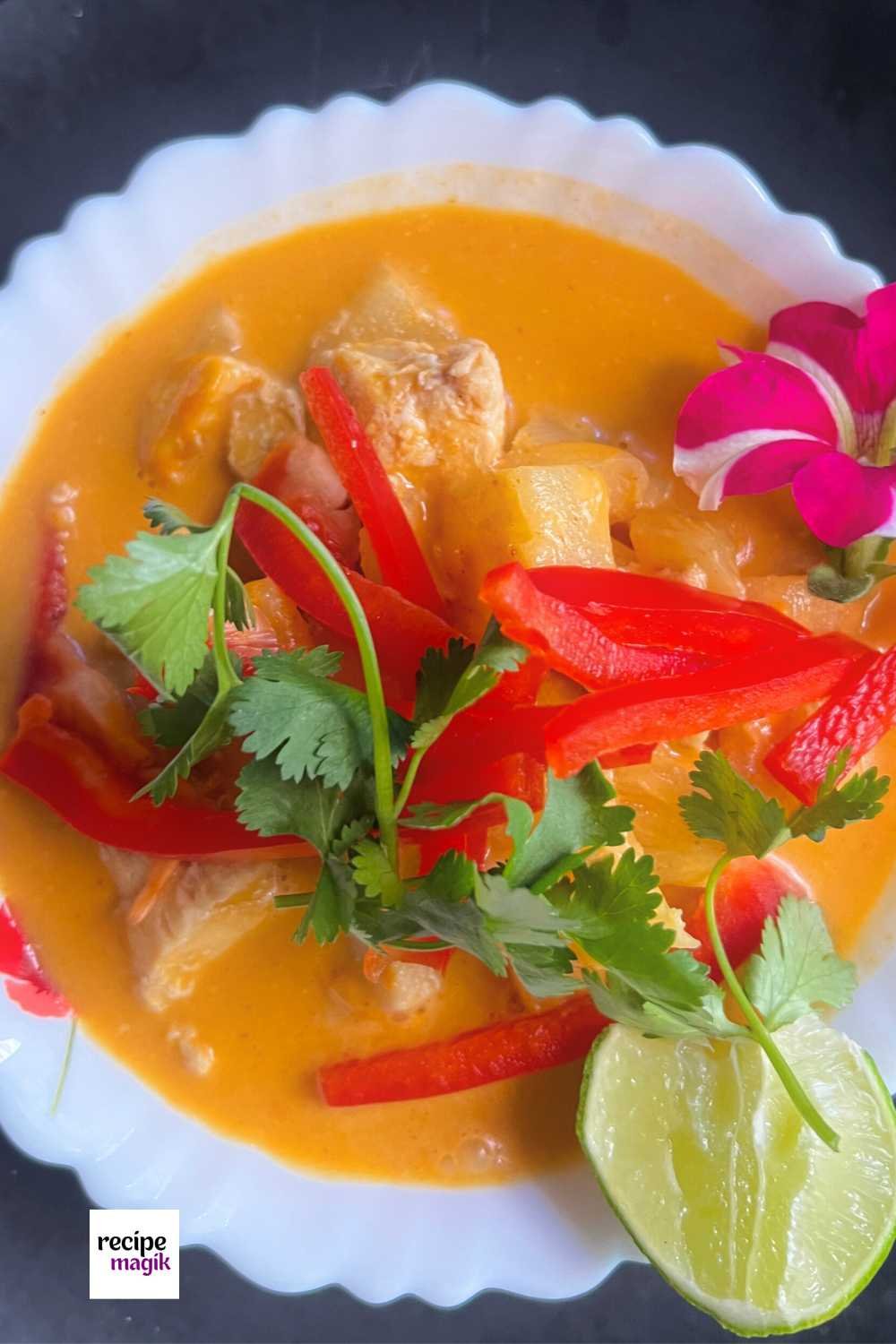
And instead of using those pre-sweetened canned pineapple chunks that most recipes default to, I'm using fresh whole pineapple, chopped into proper bite-sized pieces — ideally the same size as your chicken, so every spoonful has that beautiful uniformity.
A big chunk of fruit and a little sliver of chicken in the same bite is not the move.
Matching them up means you get the perfect balance every single time.
The result? A curry with that fruity, tropical punch playing against the deep savory of the chicken and the richness of coconut — and that contrast is exactly what makes it so ridiculously good. Let me show you how I make it.

Why Caramelizing the Pineapple🍍
If you've had Thai pineapple curry before, you've likely had a version where the fruit was added raw at the very end. And it's fine! But raw pineapple in hot curry can be a little sharp — acidic and abrupt against that silky coconut base.
Caramelizing changes the fruit's entire personality. The honey draws out its moisture, the heat concentrates the sugars, and the cinnamon adds a background warmth that you can't quite name but absolutely feel.
The pineapple stops being a garnish and becomes a proper ingredient — one that holds its shape beautifully throughout cooking but practically melts on your tongue.
The sweetness it brings is rounder, deeper, and far more interesting than anything raw fruit can offer.
It takes five extra minutes. It's completely worth it.
Ingredients 🍽️
For the caramelized pineapple 🍍
- 1½ cups fresh pineapple, cut into bite-sized chunks (match the size to your chicken pieces)
- 1½ tablespoons honey
- ¼ teaspoon cinnamon
- A pinch of salt
- 1 teaspoon coconut oil
For the chicken 🍗
- 500g (about 1 lb) boneless chicken thighs or breasts, cut into chunks (same size as your pineapple)
- 1½ tablespoons coconut oil
- Salt to season
For the curry 🥘
- 2–3 tablespoons Thai red curry paste (Mae Ploy or Maesri recommended)
- 1 can (400ml) full-fat coconut milk, unshaken
- ½ cup coconut cream
- 1–2 teaspoons coconut sugar, to taste
- 1 teaspoon fish oil
- 1–2 stalks lemongrass, bruised and halved (plus extra for garnish)
- 1 red bell pepper, roughly chopped
- A generous handful of fresh cilantro, roughly chopped
- 1 tablespoon coconut oil (for blooming the paste)
A Few Notes on Ingredients Worth Reading 🤔🧐⌘
Pineapple — Go fresh. Always fresh. Canned pineapple works if that's what you have, but the chunks tend to be softer and the sweetness is one-dimensional because of the added syrup. Fresh pineapple has a natural brightness that caramelizes with real character — you'll actually see and smell the difference in the pan. Use it.
Thai Red Curry Paste — This is the heart of the flavor, so choose it well. If you're using a store-bought paste (Mae Ploy and Maesri are both excellent choices), go easy with any additional salt — these pastes are already quite seasoned, so taste before you reach for the salt shaker.
Coconut Milk vs. Coconut Cream — We use both, and for good reason. The coconut milk forms the liquid base of the curry — lighter, fluid, giving the sauce its volume. The coconut cream is what brings that velvety, luxurious mouthfeel that makes a really great curry feel indulgent. Together, they create a sauce with real body and that gorgeous blush-orange color.
Coconut Sugar — It has a gentler, more caramel-forward flavor than white sugar and a lower glycemic index, which makes it a slightly more wholesome choice. If you can't find it, brown sugar is a perfectly decent substitute — same principle, similar result.
Instructions 🧑🍳
Step 1: Caramelize the Pineapple
Heat a wide skillet over medium-high heat and add a teaspoon of coconut oil.
Add your pineapple chunks, drizzle over the honey, sprinkle in the cinnamon, and add a small pinch of salt.
Now, resist the urge to stir constantly — let the pineapple sit and develop some color.
You want golden, slightly charred edges, not steamed fruit. This takes about 4–5 minutes.
When the chunks are sticky, fragrant, and caramelized at the edges, remove them from the pan and set aside.
Why salt on the pineapple? Salt on fruit draws out moisture and deepens sweetness — it's the same principle as salting a caramel. It makes the pineapple taste more like itself, only better.
Why cinnamon? Because cinnamon has a warmth that bridges naturally into the spiced world of Thai red curry. It echoes the aromatics in the paste without competing with them.
Step 2: Sear the Chicken
In the same skillet — don't wash it, those golden bits left behind are full of flavor — add more coconut oil over medium-high heat.
Season your chicken with a little salt and sear the chunks until they're golden on the outside.
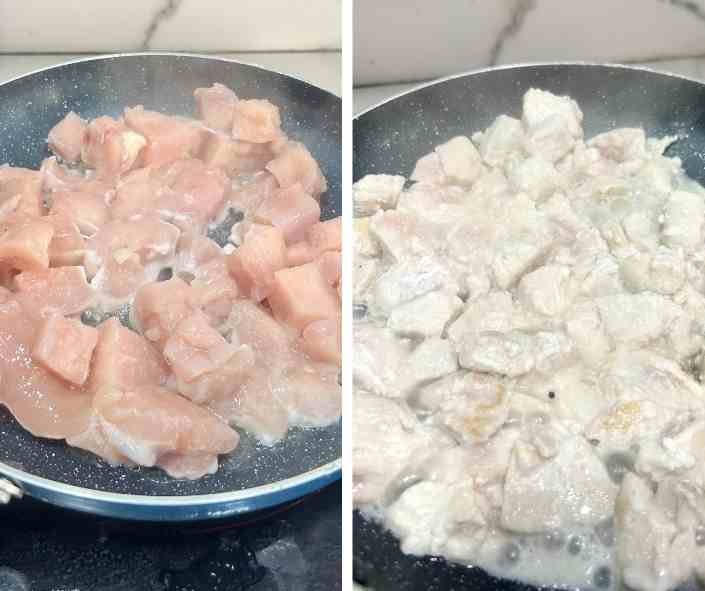
You're not cooking them through at this stage, just building color. Remove and set aside.
Step 3: Bloom the Curry Paste
Turn the heat down to medium. Add one more tablespoon of coconut oil (or if you prefer — see the tip below — use the thick cream sitting at the top of your unshaken coconut milk can instead).
Add the Thai red curry paste and let it cook in the fat, stirring and pressing it into the pan for about 60–90 seconds.
The chili, galangal, and lemongrass in the paste all open up and release their essential oils in a way they simply can't when you add them straight to liquid.
The smell at this point will be something else entirely.
Do not skip this step. Blooming the curry paste in fat before adding liquid is what separates a curry that tastes like it came from a restaurant from one that just tastes like it came from a jar.
Step 4: Build the Sauce
Pour in the coconut milk and coconut cream.
Add your lemongrass. Stir it all together — you'll see that beautiful blush-orange color come together almost immediately.
Bring to a gentle simmer and let it cook for a few minutes, letting the flavors meld and the sauce deepen slightly.
Step 5: Bring It All Together
Add the caramelized pineapple and the seared chicken back into the sauce. Stir gently to combine, making sure the chicken is mostly submerged.
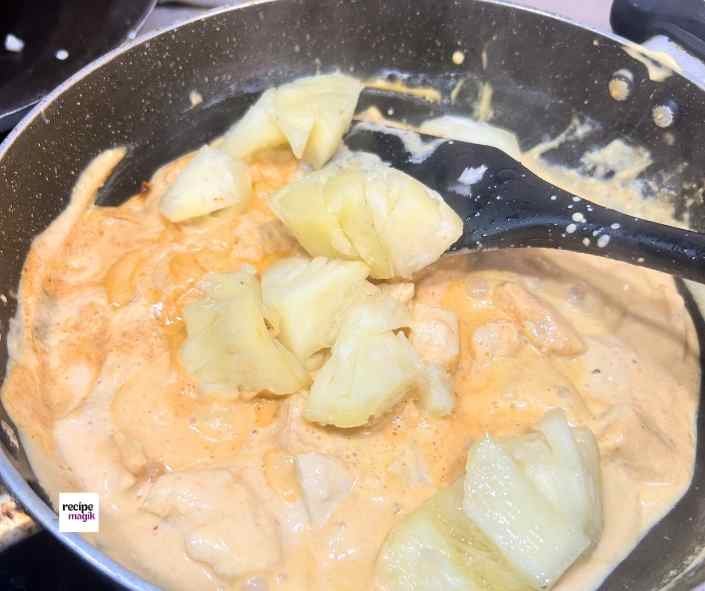
Simmer on medium-low heat for 8–10 minutes, until the chicken is fully cooked through and the sauce has wrapped itself around everything beautifully.
Taste, then add the Fish oil and coconut sugar — start with a teaspoon and adjust from there. This isn't about making the curry sweet; it's about balance.
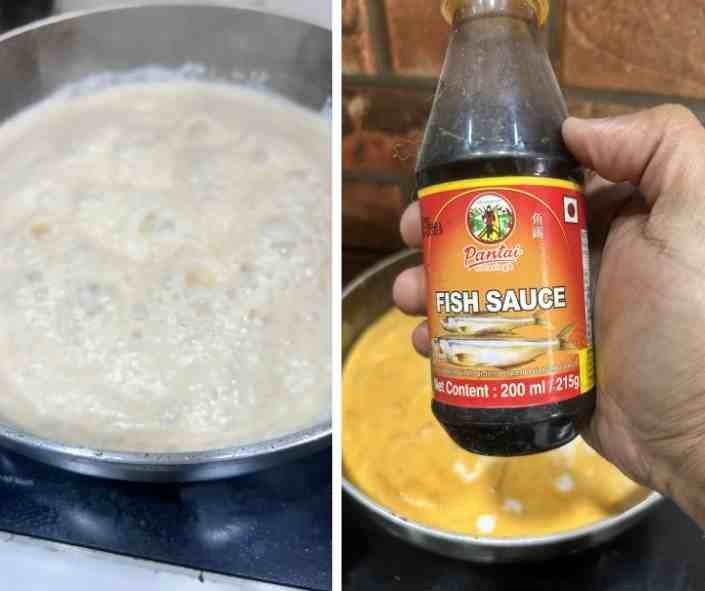
Thai cooking lives in the push and pull of sweet, salty, sour, and heat, and a touch of coconut sugar harmonizes all of those notes into something cohesive.
Remove from heat.
Step 6: Garnish and Serve
Scatter your chopped red bell peppers over the top — they go in fresh, at the end, off the heat.
You want them to stay crisp and vibrant, not cooked down and limp. Pile on the cilantro. Add a few fresh lemongrass stalks.
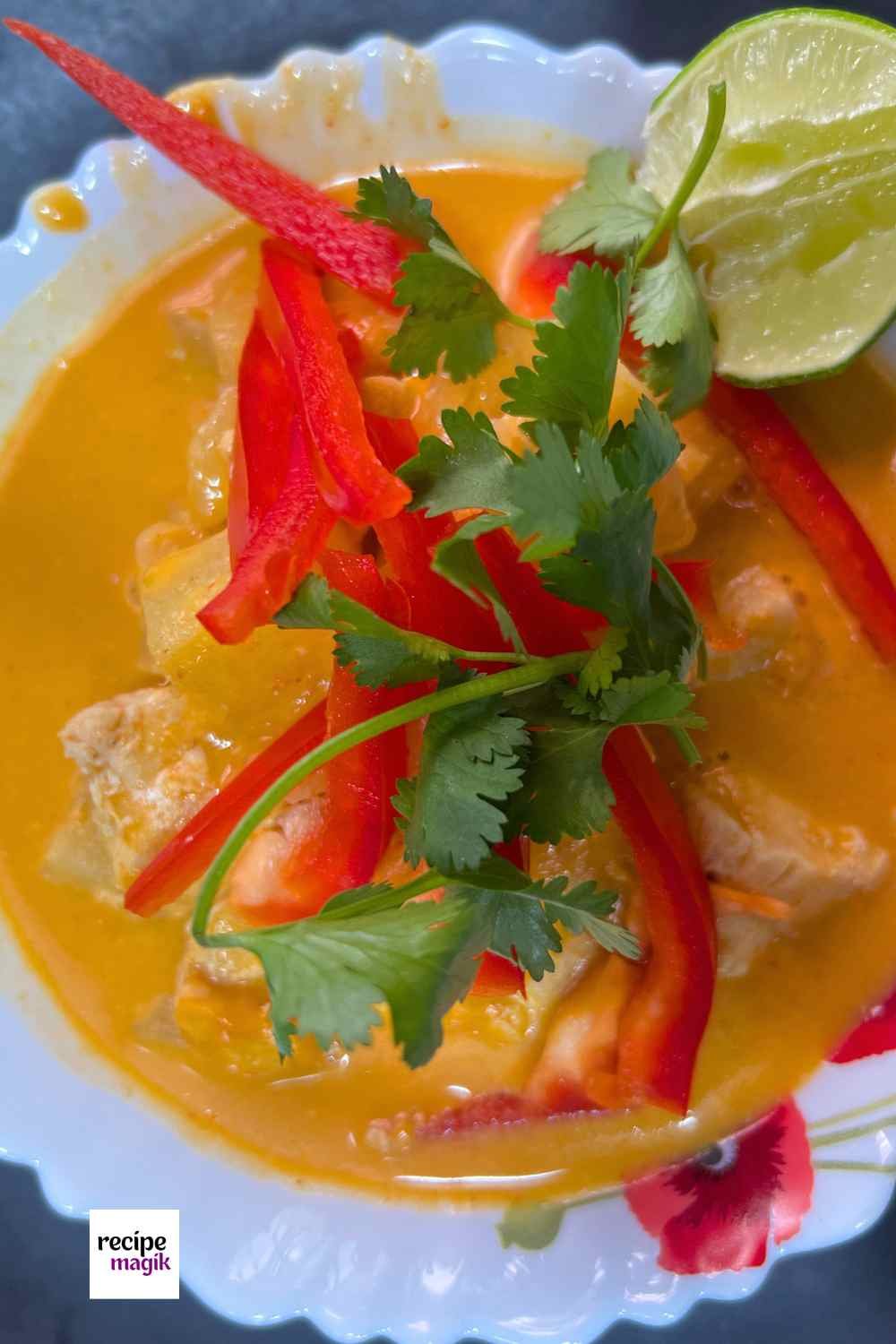
Ladle over steamed jasmine rice and let the curry pool into the bowl. 🍛
A Few Things I've Learned Along the Way🧑🍳
Don't shake the coconut can. When you open your coconut milk, you'll find a thick layer of cream sitting at the top. That cream is liquid gold — you can use it instead of oil to fry your curry paste, which intensifies the coconut flavor and makes the whole base richer. This works beautifully and is actually a very traditional Thai technique.
Make your pineapple and chicken the same size. I really can't stress this enough. When both components are cut to the same size, every forkful and every spoonful is proportional. You get fruit and meat and sauce together, the way the dish was meant to be eaten.
For a vegetarian version, swap the chicken for firm tofu puffs or bulk it out with baby corn and bamboo shoots. The caramelized pineapple pairs just as well with both.
About the lemongrass: If you're using fresh lemongrass stalks for garnish, give them a good whack with the back of your knife first — just bruise them along the length of the stalk. This cracks the fibrous outer layer and releases the essential oils inside, so they actually perfume the dish rather than just sitting decoratively on top.
Leftovers. This curry is better the next day. The pineapple softens a little more into the sauce overnight, the spices deepen, and the flavors settle into each other. Make extra.
Serving Suggestions 🥦
Steamed jasmine rice is the move — classic, correct, and perfect for soaking up that gorgeous coconut sauce.
If you want to lean even further into the tropical theme, coconut rice is a beautiful choice.
Rice noodles work wonderfully too for something a little lighter.
A simple cucumber salad on the side adds a cool, clean contrast to all that richness.
Frequently Asked Questions
How spicy is this? That depends mostly on your curry paste and how much you use. Two tablespoons of most store-bought red curry paste gives you a mild-to-medium warmth. Three tablespoons builds real heat. The coconut cream and coconut sugar both help mellow the spice, so even if you're a little heavy-handed with the paste, the sauce will balance it out somewhat.
Can I use light coconut milk? Technically yes, but the sauce will be noticeably thinner and less rich. If you're watching calories, try one full-fat can plus a small amount of light coconut cream rather than going light on both — you'll preserve most of the texture while trimming some of the fat.
How long does it keep? In an airtight container in the fridge, it keeps well for 3–4 days. It also freezes beautifully for up to two months — just freeze without the fresh garnishes and add those fresh when you reheat.
Every time I make this curry, I get a little piece of Thailand back. Not literally — I know I'm standing in my own kitchen — but in the best possible way.
The smell of the lemongrass and curry paste hitting hot coconut oil, the color the sauce turns as it simmers, the way the whole apartment fills up with something warm and alive. It's that kind of cooking.
What I love most about this version is that little fruity punch — the way the caramelized pineapple cuts through the richness of the chicken and coconut with something bright and tropical.
Meaty and creamy and sweet all at once. It makes the dish feel like a vacation on a plate.
A traditional Kaeng Sapparot is already a beautiful thing. This is that, with a little extra intention — and a lot of extra flavor.
Prep time: 15 minutes | Cook time: 30 minutes | Total: 45 minutes | Serves: 4
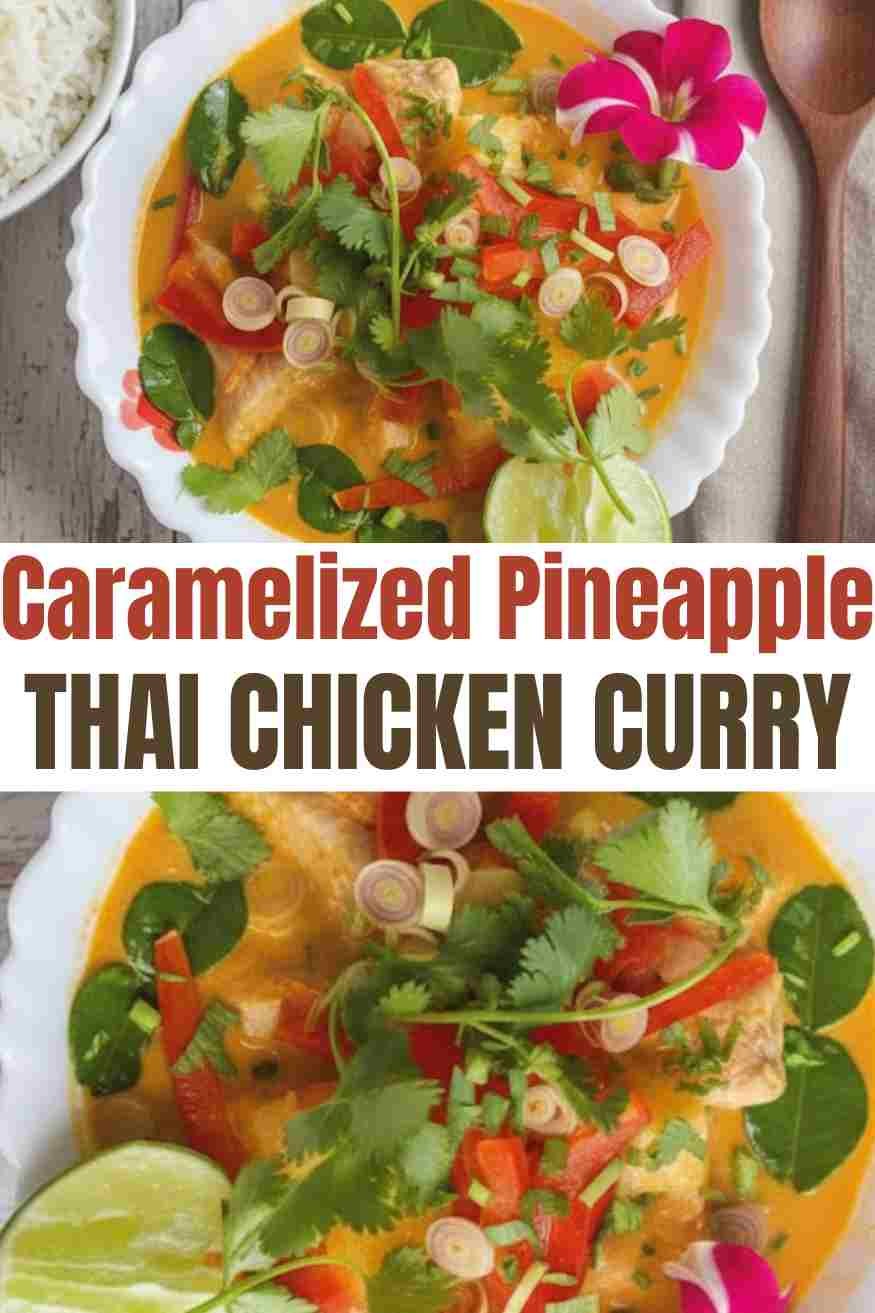
Caramelized Pineapple Thai Chicken Curry
INGREDIENTS
For the caramelized pineapple 🍍
- 1½ cup fresh pineapple cut into bite-sized chunks (match the size to your chicken pieces)
- 1½ tablespoon honey
- ¼ teaspoon cinnamon
- A pinch of salt
- 1 teaspoon coconut oil
For the chicken 🍗
- 1 lbs boneless chicken thighs or breasts, cut into chunks (same size as your pineapple
- 1½ tablespoon coconut oil
- Salt to season
For the curry 🥘
- 2 tablespoon Thai red curry paste (Mae Ploy or Maesri recommended)
- 1 can full-fat coconut milk unshaken (400ml)
- ½ cup coconut cream
- 2 teaspoon coconut sugar to taste
- 1 teaspoon fish oil
- 2 stalks lemongrass bruised and halved (plus extra for garnish)
- 1 medium sized red bell pepper thinly sliced
- fresh cilantro roughly chopped
- 1 tablespoon coconut oil (for blooming the paste)

INSTRUCTIONS
- Caramelize the pineapple: Heat a wide skillet over medium-high heat and add 1 teaspoons coconut oil (for pineapple). Add 1.5 cups fresh pineapple, cut into bite-sized chunks, drizzle over 1.5 tablespoons honey, sprinkle in ¼ teaspoons cinnamon and 1 pinch salt (for pineapple). Let the chunks sit without stirring too much — you want golden, caramelized edges, not steamed fruit. Cook until sticky and fragrant, then remove and set aside.
- Sear the chicken: In the same skillet (don't wash it — those caramelized bits are pure flavor), add 1.5 tablespoons coconut oil (for chicken) over medium-high heat. Season the boneless chicken thighs or breasts, cut into bite-sized chunks with a little salt and sear until golden on the outside. You're not cooking them through yet, just building color. Remove and set aside with the pineapple.
- Bloom the curry paste: Turn the heat down to medium. Add 1 tablespoons coconut oil (for curry paste) to the skillet (or use the thick cream from the top of your unshaken coconut milk can instead of oil (a great traditional trick). Add 3 tablespoons Thai red curry paste and cook, stirring and pressing it into the pan, until deeply fragrant. This step is non-negotiable.
- Build the sauce: Pour in 1 can full-fat coconut milk (do not shake the can) and ½ cups coconut cream. Add 2 pieces lemongrass stalks, bruised and halved. Stir everything together — it will turn a gorgeous blush-orange almost immediately. Bring to a gentle simmer and let it cook, allowing the flavors to deepen.
- Simmer everything together: Add the caramelized pineapple and seared chicken back into the curry. Stir gently to combine, making sure the chicken is mostly submerged in the sauce. Simmer on medium-low heat until the chicken is fully cooked through and the sauce has wrapped itself around everything beautifully. Taste, then stir in 1 teaspoons coconut sugar to balance the flavors.
- Garnish and serve: Remove from heat. Scatter 1 pieces red bell pepper, roughly chopped over the top fresh — do not cook the peppers in, they should stay crisp and vibrant. Pile on ½ cups fresh cilantro, roughly chopped. Add 2 pieces extra lemongrass stalks (for garnish) for aroma and presentation. Serve immediately over steamed jasmine rice.
Michelle says
This looks wonderful! I’m always looking for something mild enough for the grandkids but flavorful enough for me.
Anjali says
Thank you so much! That is exactly why I love this recipe. The caramelized pineapple adds a natural sweetness that kids usually adore, while the Thai aromatics keep it interesting for the grown-ups. I hope it’s a hit with the whole family!